Painting Machine
The Painting Machine is a tool to visualize and create drawings and paintings using 3D scans and 3D scan data.
This is a work in progress.
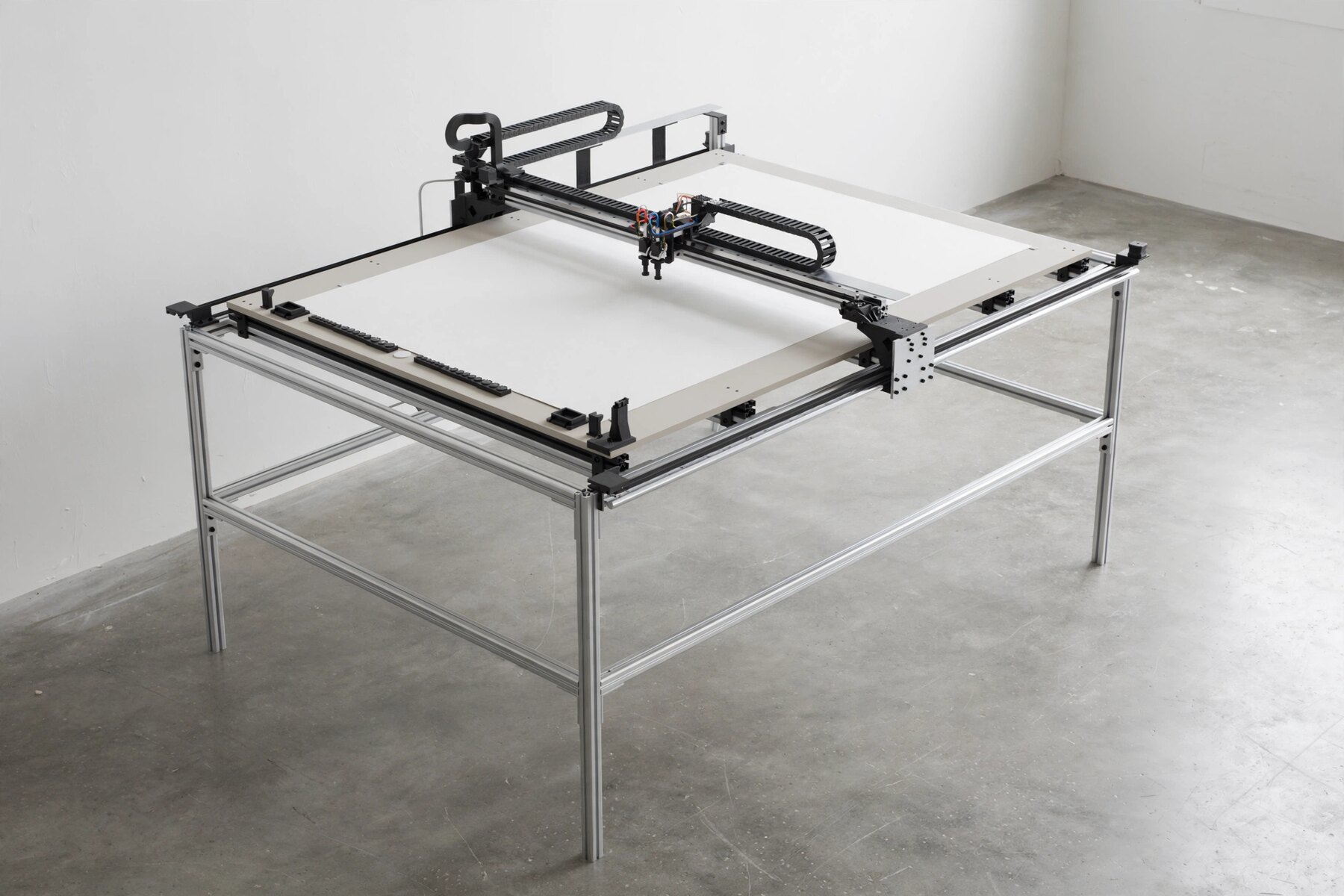
The machine is a large table with a painting head that travels above it. A sheet of paper or board lies flat on the table, and the head moves to any point on the sheet and presses a small wet sponge onto it. The painting area is about 1.2 by 1.7 meters, roughly four feet by five and a half feet.
A 3D scan records the shape of a real object or place. The machine is being designed so that this kind of data can be turned into marks on a sheet, so that a scan becomes a picture you can look at and study.
How it paints
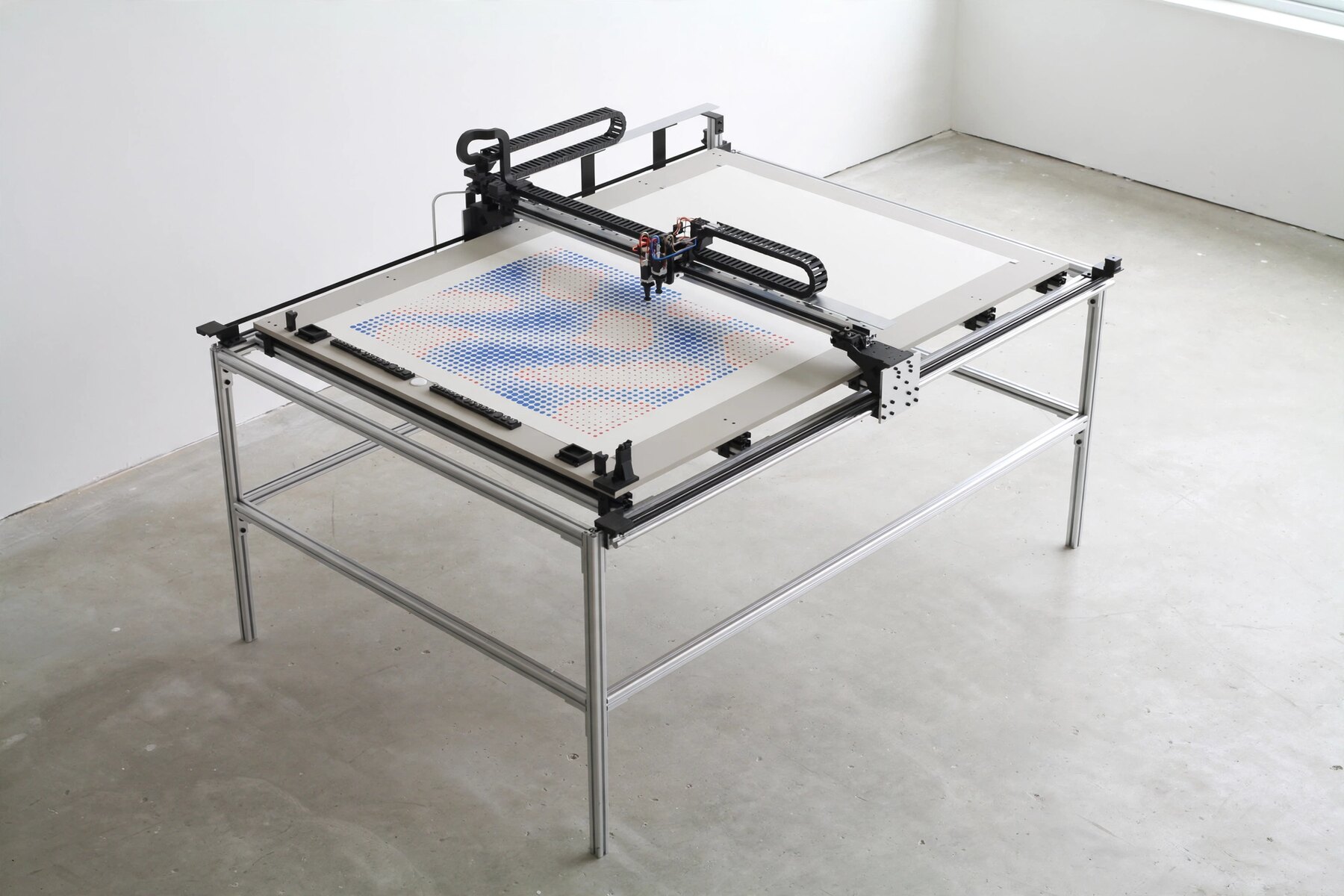
The machine paints by dabbing. It lowers a wet sponge onto the sheet, lifts it, moves on and does the same again, so a picture is built up one mark at a time. When a mark should be a different size the machine swaps to a larger or smaller sponge. Two paint palettes sit on the table beside the sponges.
The painting head
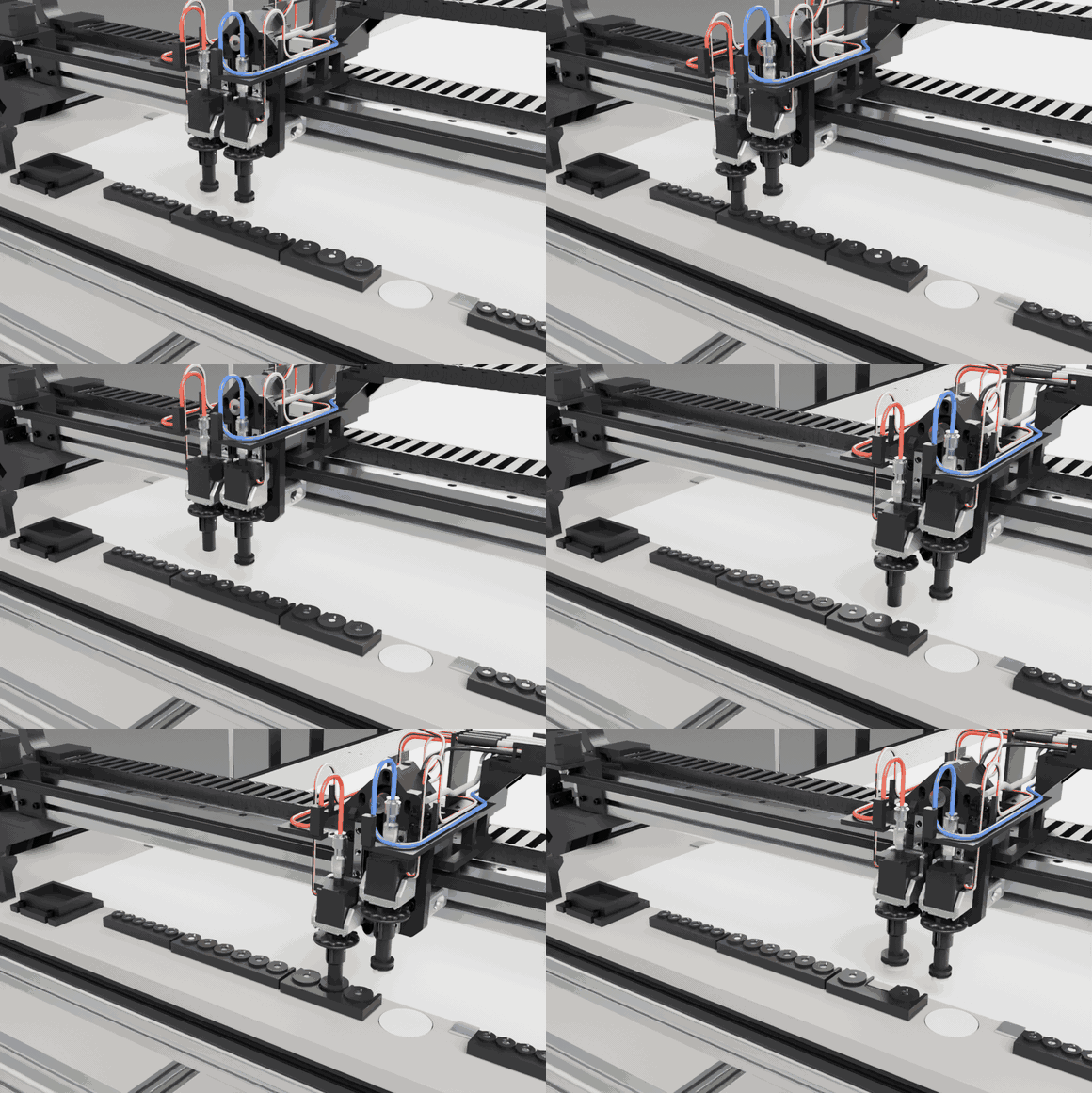
The head comes from the LumenPnP, an open source machine made by Opulo that normally places tiny electronic parts onto circuit boards. It has two nozzles that can move up and down, turn, and hold things with suction. Here each nozzle carries a sponge, one for each color of paint.
Each sponge sits in a small printed cap that a magnet holds onto the nozzle. Thirty caps in three sizes, 10, 16 and 22 millimeters across, hang in racks along the front of the table. To change sponges the head slides the cap it is carrying back into its slot, lifts away, and comes down on top of another. A camera under a small glass window in the table looks up at the sponge to check it.
How it moves
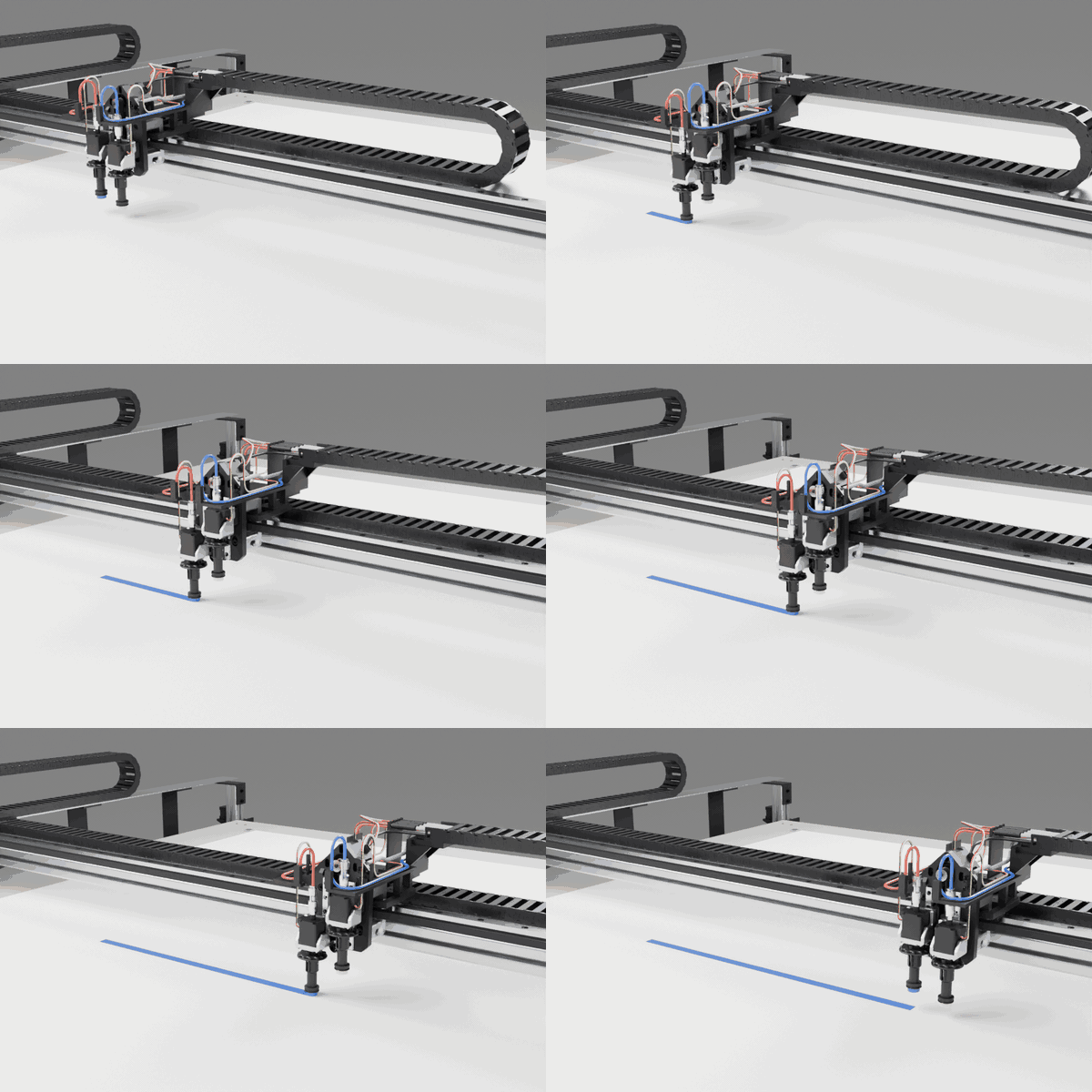
The head slides from side to side along a rail 1.5 meters long. That rail is carried from the front of the table to the back on two more rails, each 2.2 meters long. Motors pull the head into place with toothed belts, the same way a desktop printer moves its print head. The machine can paint on flat material between 0.2 and 6 millimeters thick, which covers everything from paper to thin board.
Every movement has been tested in the computer model first, to make sure nothing collides before any part is made.
Example artworks
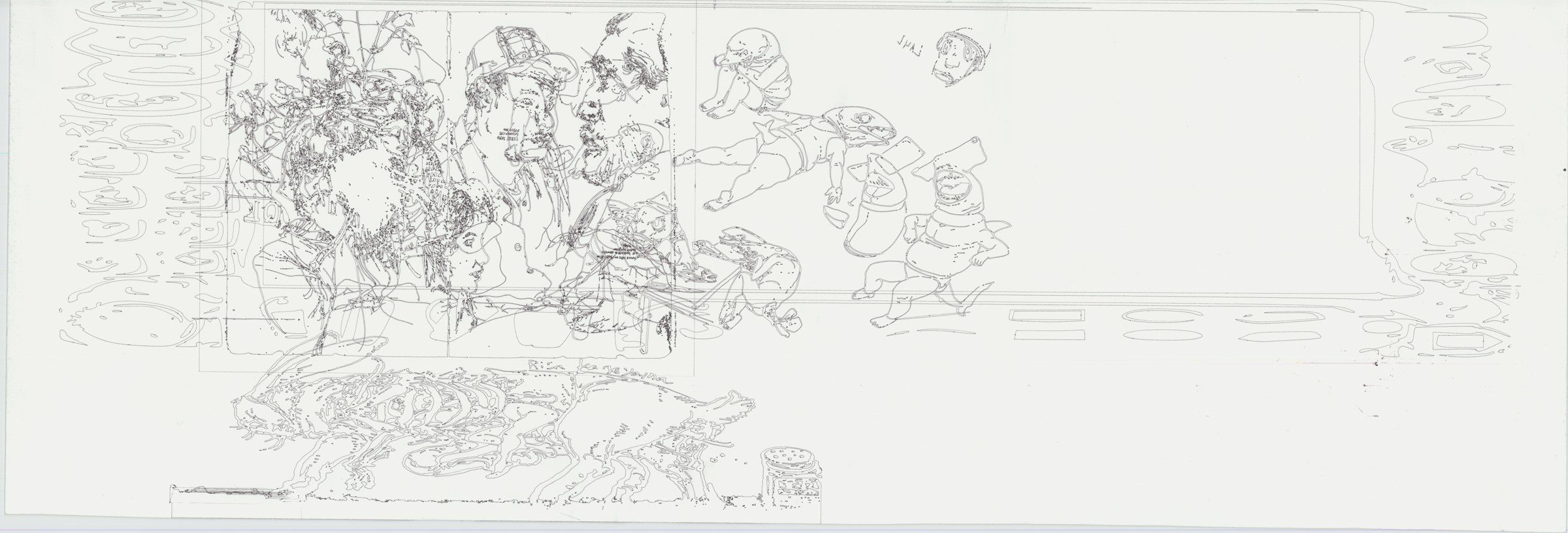
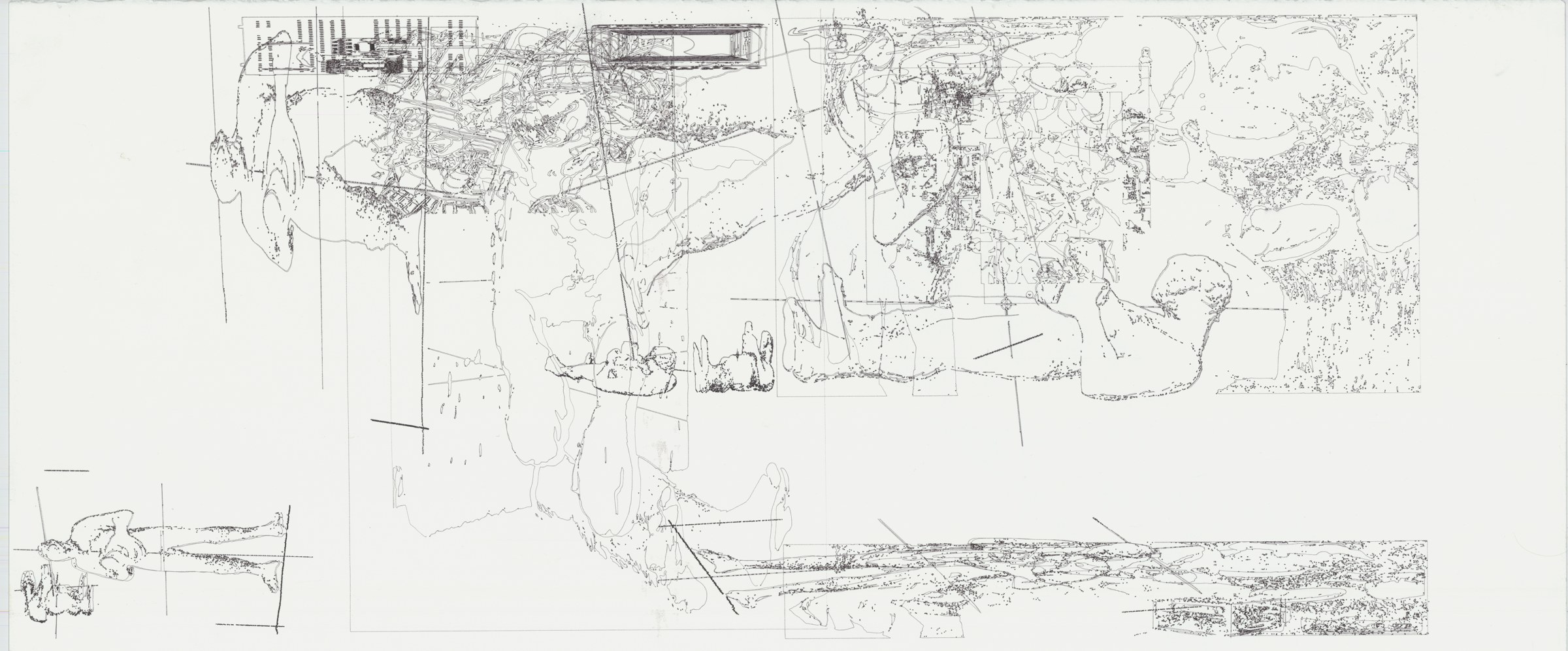
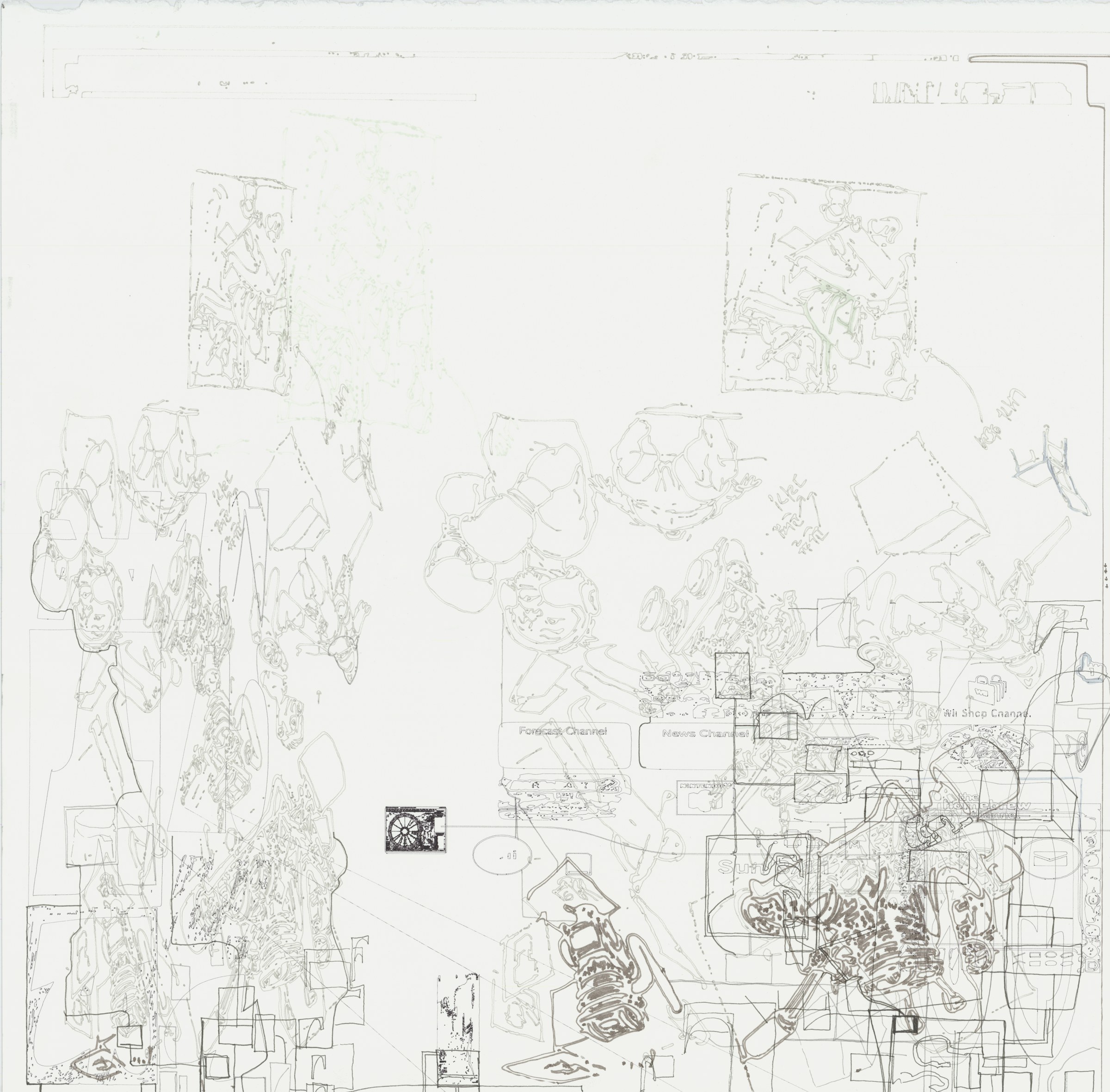
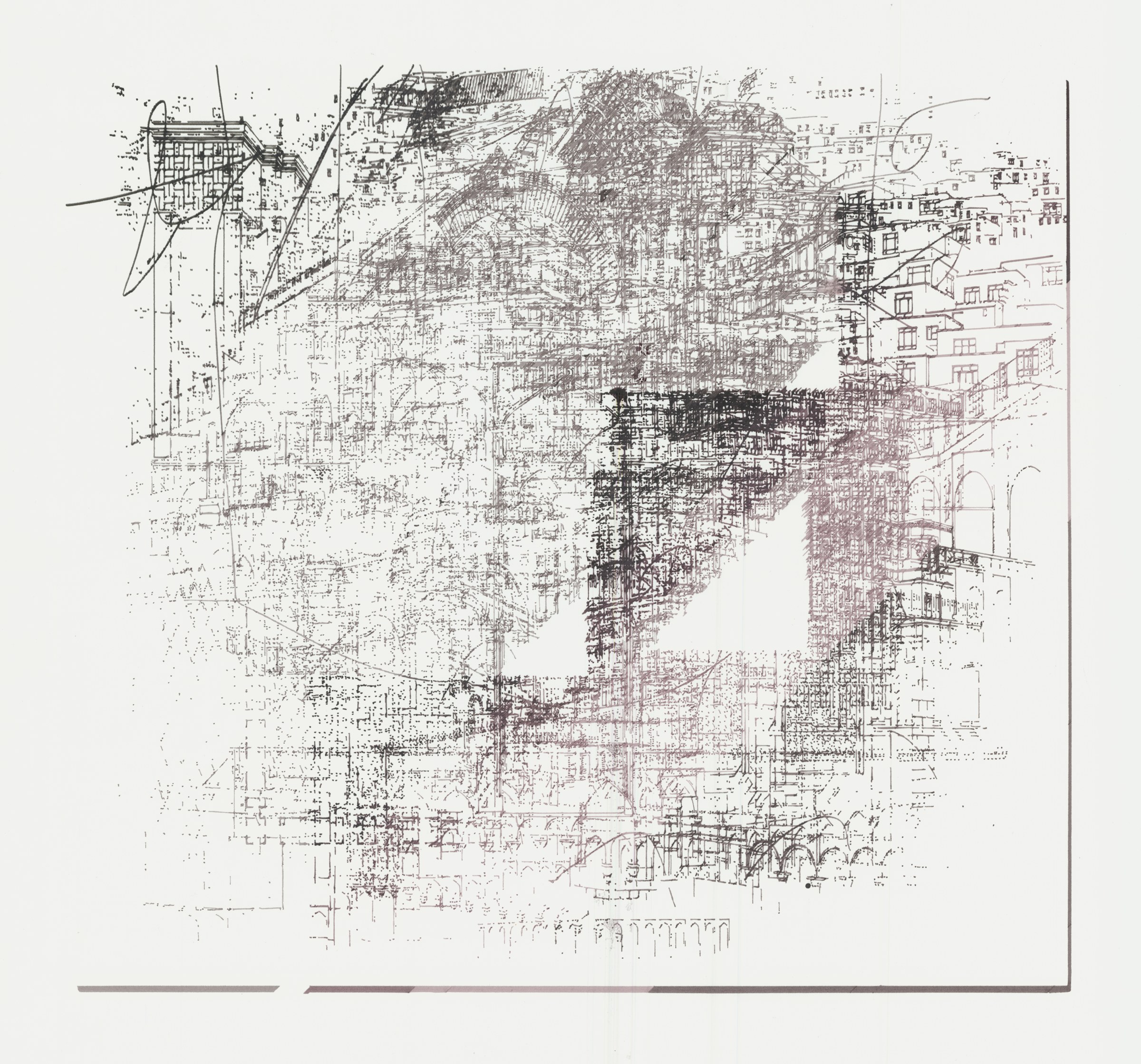
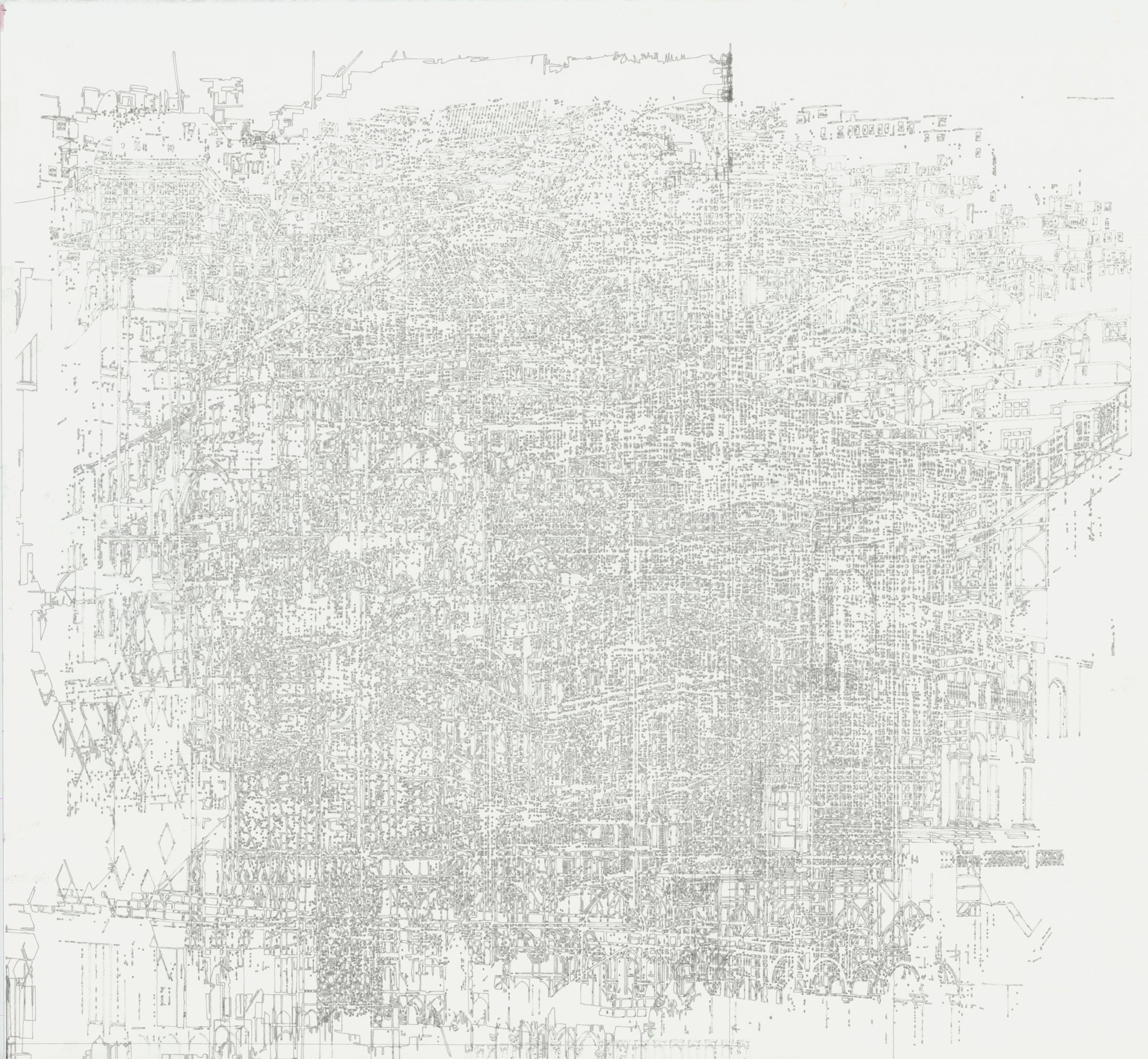
We are using 3D scans to create example artworks. The drawings below were made from 3D scan data and show the kind of image the machine is meant to produce. They were made on an earlier draft of this machine. The machine being built now is its second version.
Parts
The machine is made from three kinds of parts. The first kind is 3D printed. There are 78 different printed designs and 158 printed pieces in all, which together use about six kilograms of plastic. Most are printed in a tough everyday plastic called PETG, and the few pieces that must stay very stiff are printed in a plastic strengthened with carbon fiber.
The second kind is bought ready made. This includes the rails, belts and motors that move the head, the aluminium frame, the LumenPnP head and its control box, a camera, magnets, wiring and the tubing for suction.
The third kind is fasteners. The machine is held together by 597 screws, nuts, washers and spacers.
The interactive parts list shows every part next to a 3D model of the machine. Choose a part in the model to find its row in the list, or choose a row to see where that part sits.